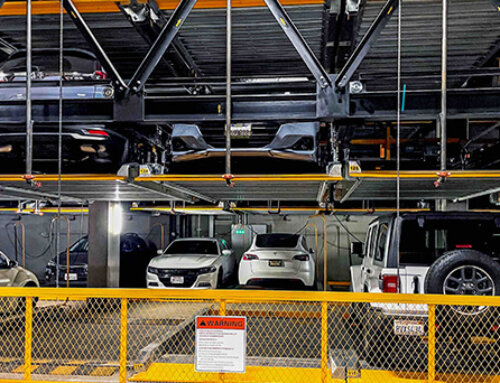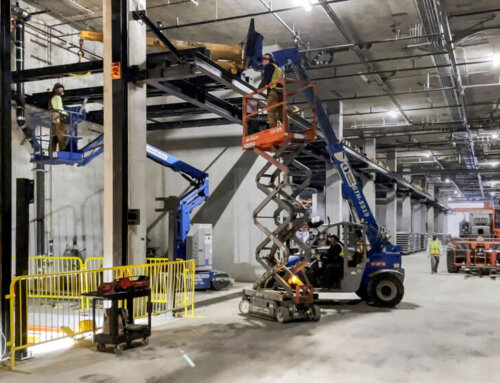


Three-level Puzzle Parking System (Fremont, Calif.).
Reduce Your Parking Footprint
Learn how to compare the space consumed by mechanical parking solutions versus traditional surface and ramp systems.
Mechanical Parking is a Better Use of Space
Space saving is the primary benefit of automated parking systems and is a key element in achieving the highest and best use of land. To that end, let's compare the footprint of surface and mechanical parking.
By automating the parking process, architects and developers optimize the space committed for parking and create the conditions to realize a range of benefits that impact owners, residents, and neighborhoods.
Optimizing Space with Mechanical Parking
NOTE: The diagrams below have been simplified for illustration purposes.
In the conceptual design phase, architects typically use a 1:2 ratio to compare the volume needs between mechanical and traditional solutions: With mechanical parking, half the volume is necessary to park the same number of vehicles, thus reducing your parking footprint.
How is this achieved?
Here is an example of a typical plan view of a surface lot for a residential development where the parking area is 166′ by 114′ (19,836 ft2) and accommodates 50 vehicles. The opportunities for this type of surface plan are fixed at 50 vehicles.

How are Reduced Parking Footprints achieved?
Here is an example of a typical mechanical parking design plan view of a surface lot for a residential development where the parking area is 166′ by 114′ (19,836 ft2) and accommodates 50 vehicles. The opportunities for this type of surface plan are fixed at 50 vehicles.
By contrast, this example of a two-level tandem puzzle system demonstrates one way to optimize space while maximizing parking revenue.
Here, the dimensions have been reduced to 112′ by 40,′ while providing the same parking volume. With a 30′ drive aisle, the footprint for this solution is 40% of the previous surface lot (7,840 ft2). The total volume for the project is 62,000 ft3.

We can apply the same approach to large, ramped parking structures.
Consider this plan view of a four-level, 400-vehicle, surface and ramp parking structure. The footprint for this project is 214′ x 206.′

In this elevation view, we see the large amount of valuable space consumed by ramps and the repetition of drive lanes needed for each level.

This is the plan view of the same parking footprint, this time with a four-level mechanical parking system. We see a very similar layout of spaces, but what has happened to the structural requirements for this project?

This reduced parking footprint solution can be deployed with a single level of construction by stacking the vehicles. This approach drastically reduces the project’s time and expense and lowers the structure’s height from 40′ to 32.′
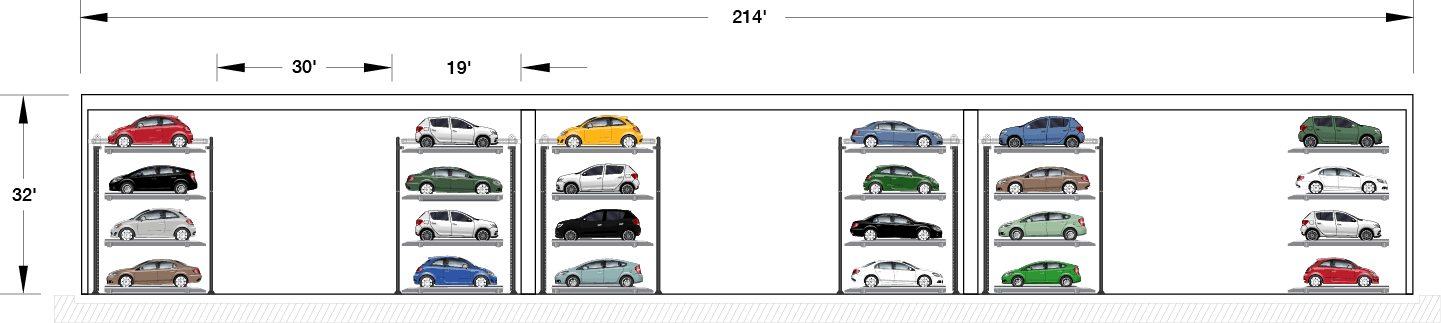
Furthermore, the structure’s height could be lowered to 26′ by placing the first parking level below grade.

Mechanical Parking is a Catalyst for Innovation
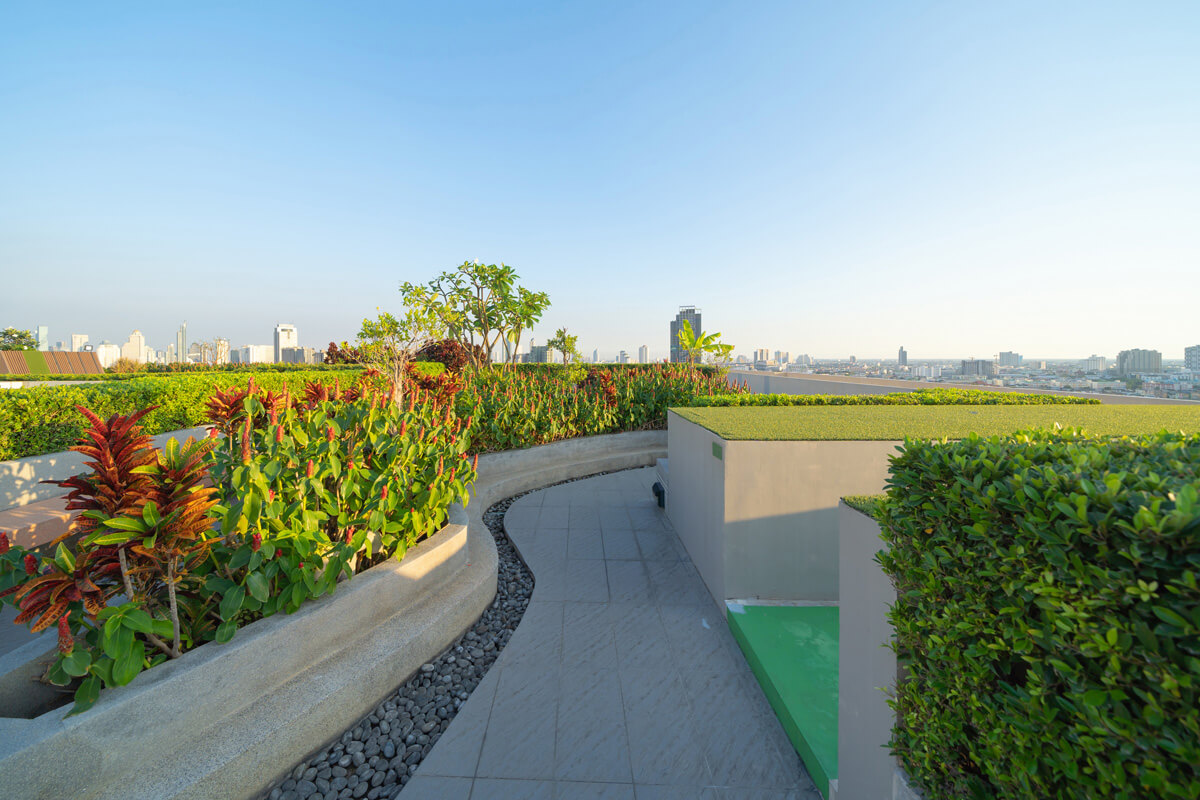
In this use case, developers and municipalities could consider adding a rooftop recreational green space to a parking structure. By creating this space, building owners provide one of the most sought-after amenities in urban areas.
A plan like this goes far beyond simply providing parking spaces; it is an engine of community improvement. For architects and developers, these results open new horizons to meet the complex needs of high-density communities.
How can you reduce your parking footprint?
One way to reduce your parking footprint is to implement automated puzzle or car lift parking systems. These systems utilize vertical space more efficiently, increasing parking capacity without expanding the footprint. It can also save money on construction and maintenance costs for parking spaces. And by reducing your parking footprint, the environment can benefit from lower emissions.