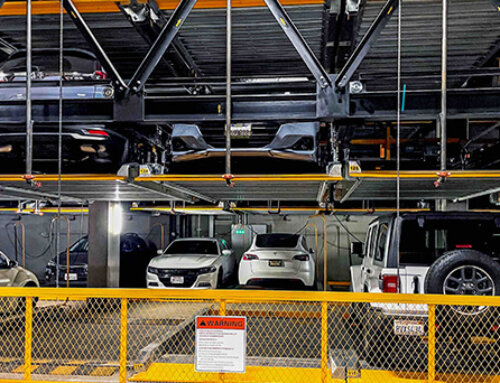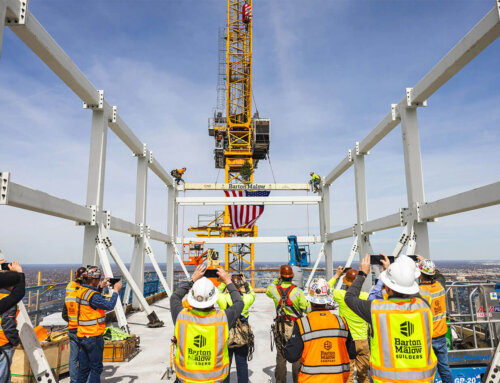


233-space Fully Automated System During Installation (Millbrae, Calif.)
Go inside the SilMan mechanical parking installation process as we shine the spotlight on our Specialty Trade Teams.
Self-Performance and the Ultimate Design and Build Experience
Relationships and resources are the building blocks of creating value. This truism applies within teams and between teams. SilMan’s commitment to in-house expertise is emblematic of our commitment to collaboration, service, and nurturing authentic client relationships. While many design companies turn over their project to third parties for installation, SilMan remains fully engaged through every step of the mechanical parking installation process. This “one-stop-shop” methodology is the foundation of our success.
What is the Mechanical Parking Design Process?
SilMan’s automated parking system design process provides continuous personal service throughout every project phase: pre-construction, course of construction, and commissioning, as well as service and support. However, the synergy between the SilMan team, our client, and other stakeholders reaches a new high when the installation arrives onsite. Finally, we begin to see the system come to life!
This article will explore the scope, challenges, and specialized skills deployed during a parking system installation, and the unique value our in-house teams bring to project owners.
What Mechanical, Electrical, and Structural Services Are Provided?
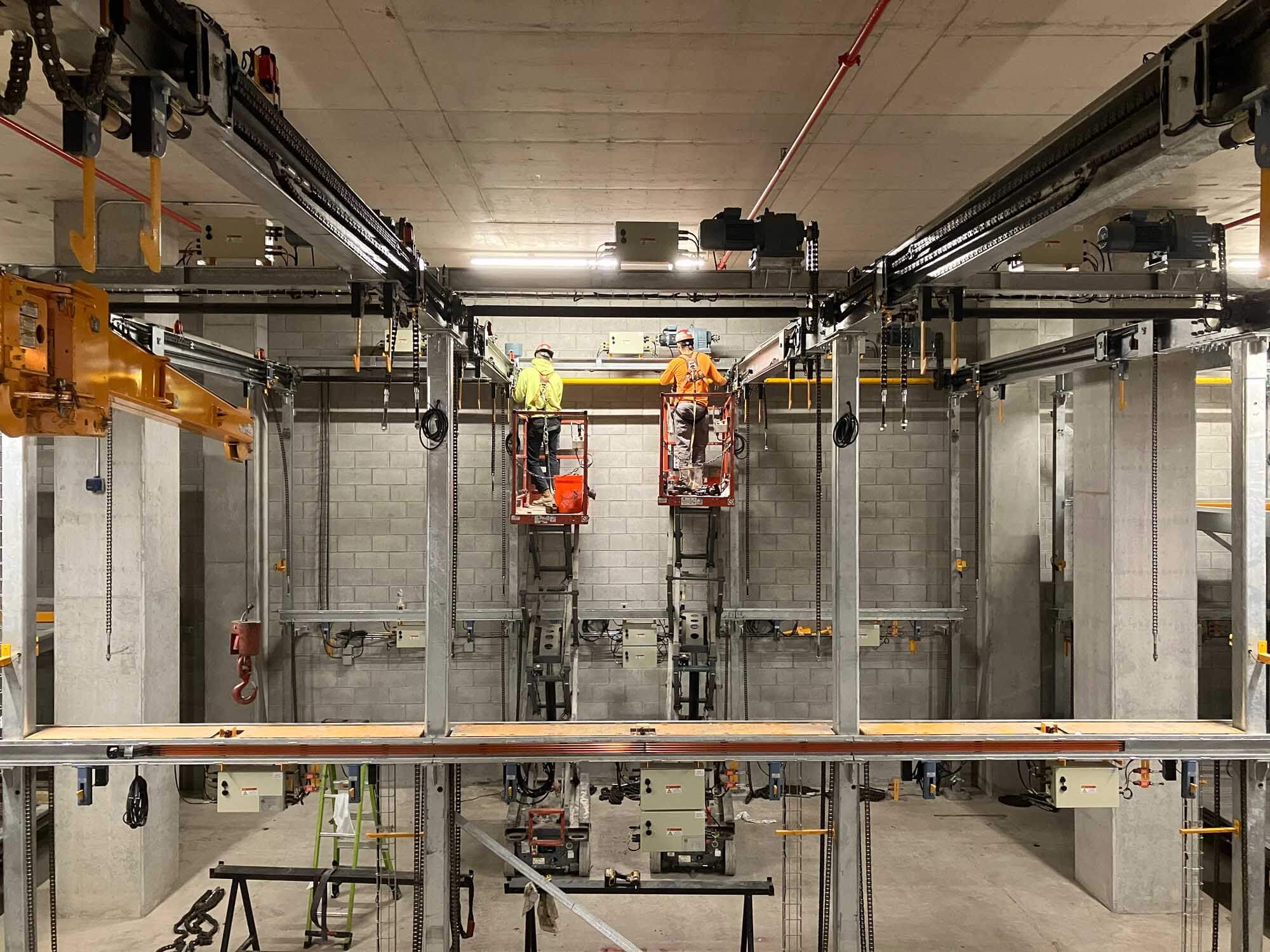
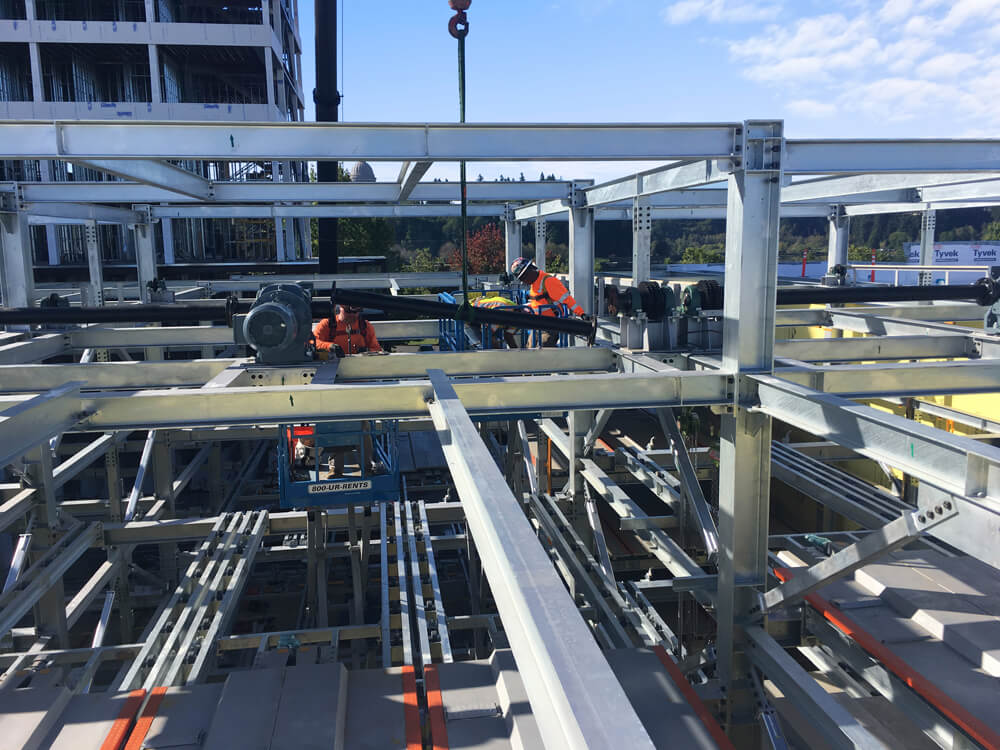
Installing an automated parking system involves support structures, electromechanical devices that move vehicle pallets, and control devices that direct the system. Typical scope of work includes:
Project Management: Site Management, JHA and Safety Protocols, Permitting
Structural Steel: Steel columns and beams, Decking, Field Welding (if needed)
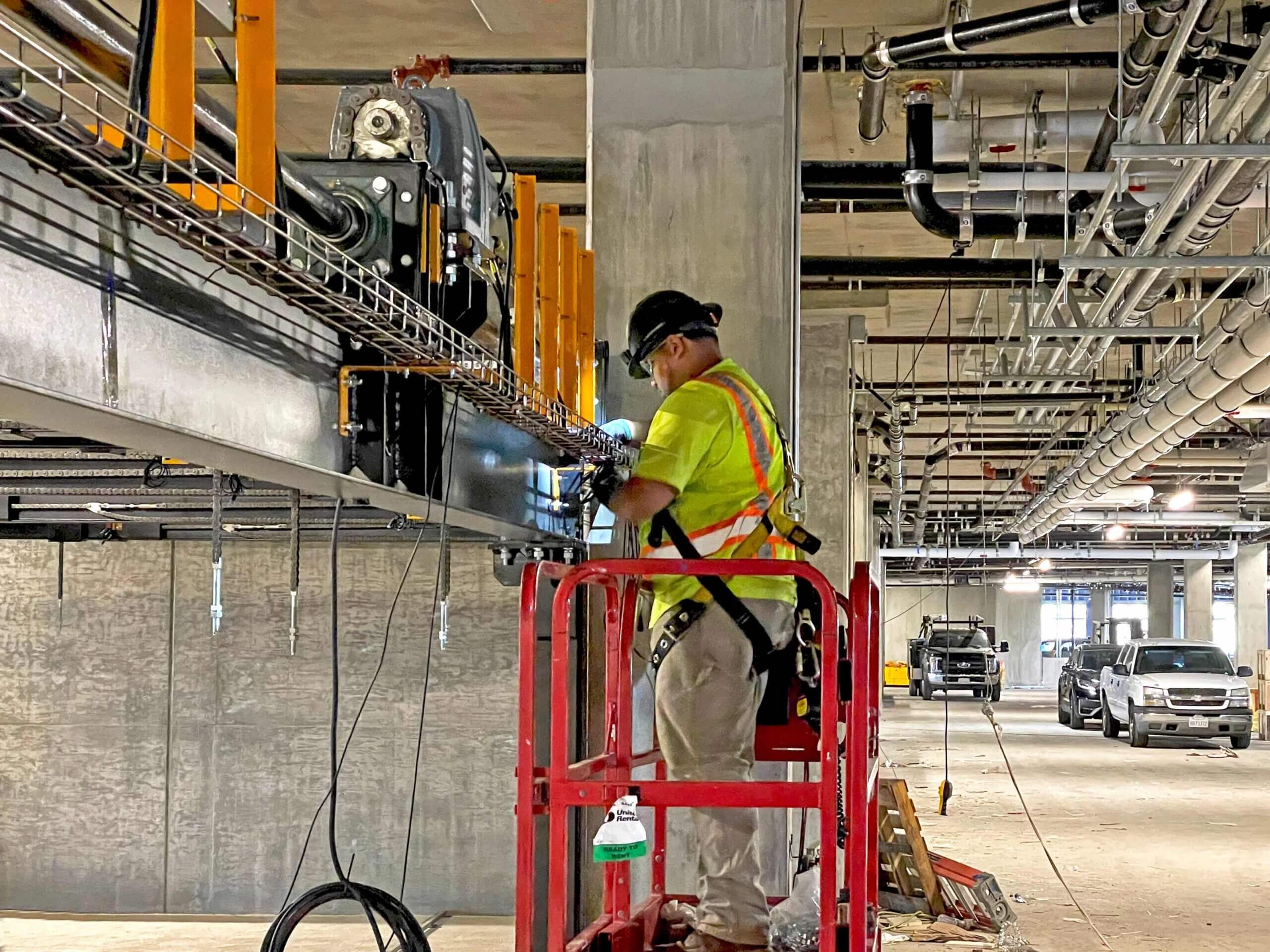
Mechanical Installation: Motors, Chains, Sprockets, Electronic Sensors, Solenoids, Low-voltage sensors, PLC control board, Limits
Electrical Installation: Primary power, Electrical control wiring, PLC cabinets, Raceway and wiring (Lifting motors, Transverse motors, Gate motors)
Commissioning: Test all Electrical Devices, including Chain Detection, Limit Switches, Platform Hook sensors, Stop sensors
Commissioning is the final stage of installation. This process confirms that all spaces perform as designed. As a final step, the team performs an error-free 24-hour continuous operations test. SilMan installation teams use real vehicles during commissioning.

A Dodge Challenger is utilized as a test vehicle during the commissioning of a Fully Automated System.
What are Some Challenges of Multifamily Residential Construction Sites?
Automated parking system projects present unique challenges for our installation team.
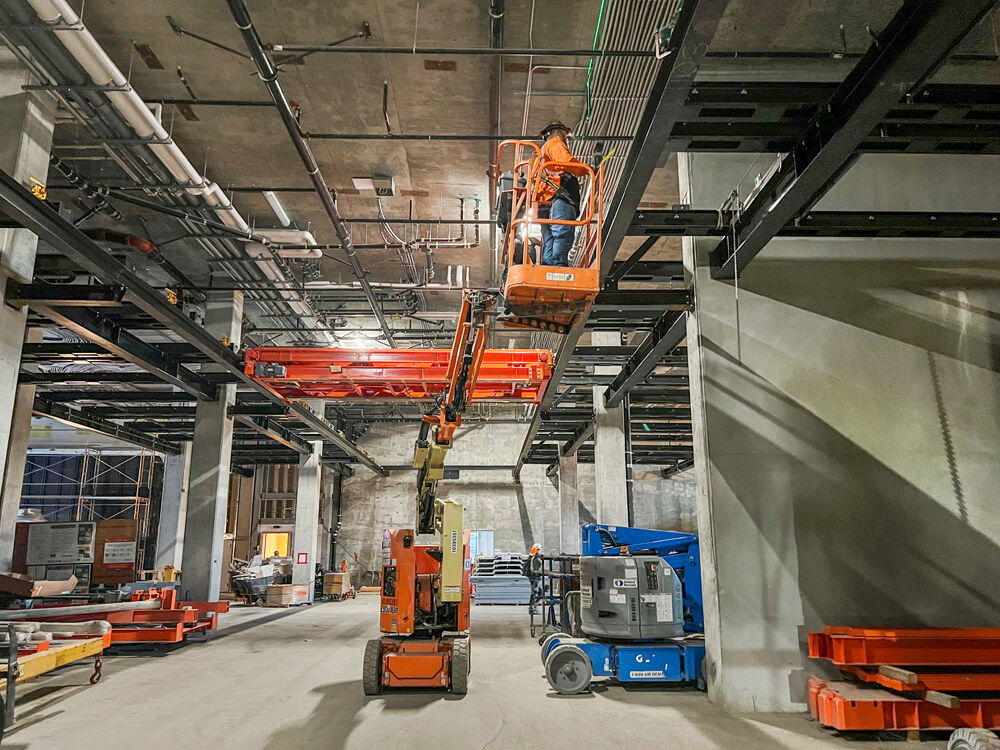
The primary hurdle is the environment itself. Since mechanical parking solutions are intended to save space in high-density neighborhoods, working conditions are naturally confined.
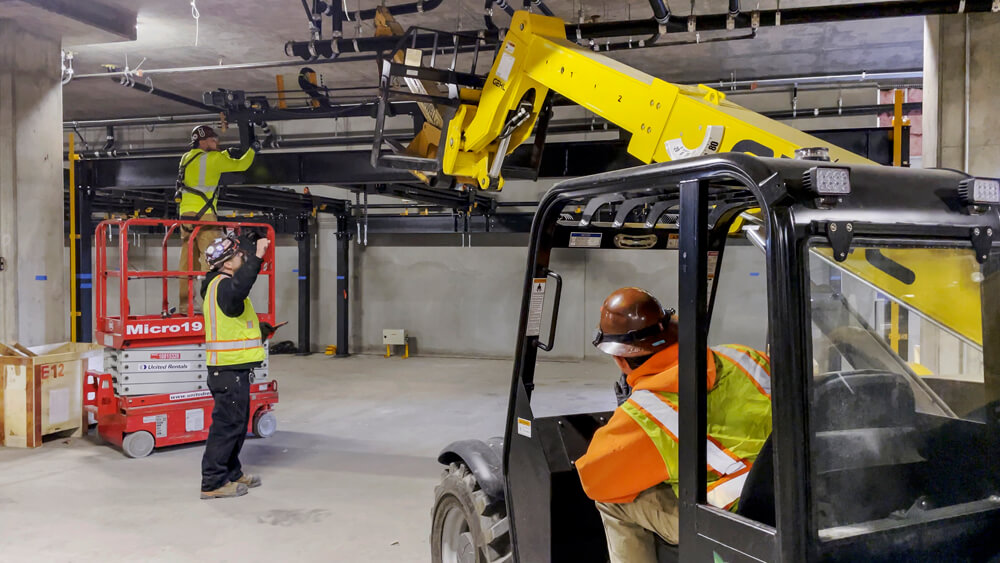
Moreover, job sites are most often located within the foundation of an active construction site. Team members may encounter limited lighting, noise, unfinished infrastructure, and an array of materials and supplies from multiple contractors.
What circumstances impact mechanical parking garage installations:
- Accessibility to workspaces
- Movement of equipment and materials Inventory control
- Proximity to resources
- Audio and visual communication
Furthermore, adjacent trade teams – sometimes working overhead of SilMan team members – present risks that require specific protocols and cooperation between tradespersons. SilMan project managers are active participants in the process from the very beginning of the project, long before teams are onsite. Under their experienced, watchful eye, site leaders proactively work with general contractors to address potential conflicts between trades or the use of space near the system or in laydown areas.
For these reasons, it is also crucial to establish and adhere to safety best practices.
SilMan’s in-house safety management team is an active force supporting SAPS skilled trade teams. It is standard operations for SilMan Safety to prepare a Job Hazard Assessment (JHA) for every project. This detailed document identifies risks and provides specific guidance for each.



Collaboration and Collective Parking Success
Building a Community One Space at a Time
You may have noticed that there is no mention of subcontractors throughout this article. As mentioned earlier, SilMan is a self-performing industrial services company, which reflects our commitment to building relationships.
Practically speaking, this approach provides unique value for the parking sector, bringing quality and clarity throughout every project phase. The SilMan Team is with you every step of the way.
By working together, every contributor is well-positioned to successfully implement the project owner’s vision. At the heart of this success—where the rubber meets the road—lies a skilled, customer-focused automated parking system installation team.